

Welcome to The Jewish Center of The Moriches
The Little Temple with The Big Heart

Jewish Holidays at JCM
The Jewish calendar connects us to our history, our traditions, the seasons, and one another. Throughout the year, the Jewish Center of the Moriches gathers to observe and celebrate holidays through worship, music, learning, shared meals, remembrance, and community events.
Some holidays are marked with special services at the synagogue, while others are celebrated primarily in the home. Our observances may vary from year to year, so please consult our calendar and News & Events page for current dates and programs.
Everyone is welcome to learn, participate, and celebrate with us.
Rosh Hashanah and Yom Kippur
The sounding of the shofar is an essential and emblematic part of both Rosh Hashanah and Yom Kippur.
The High Holy Days begin with Rosh Hashanah, the Jewish New Year, and culminate with Yom Kippur, the Day of Atonement.
This sacred season invites reflection, repentance, reconciliation, and renewal.
JCM holds High Holiday services and related programs for members and guests. Because schedules, reservations, and ticket information change each year, complete details are available on our dedicated High Holidays page.


Sukkot is a joyful autumn festival commemorating the Israelites’ journey through the wilderness. Traditionally, meals and gatherings take place in a sukkah, a temporary outdoor structure that reminds us both of life’s fragility and of the sheltering presence of God.
Watch our calendar for information about Sukkot services and community activities.
Shemini Atzeret and Simchat Torah
Immediately following Sukkot, we observe Shemini Atzeret, a distinct sacred festival whose name means “the Eighth Day of Assembly.” After the outward celebration of Sukkot, Shemini Atzeret offers a quieter time for gathering, prayer, and reflection. Traditional observances include Tefillat Geshem, the prayer for rain and for the blessings of the coming season, as well as the Yizkor memorial service.
In the Diaspora, Simchat Torah follows on the next day. It celebrates the completion of the annual Torah-reading cycle with the final verses of Deuteronomy and its immediate beginning again with Genesis. Through singing, dancing, and carrying the Torah scrolls in joyful processions known as hakafot, we celebrate Torah, learning, continuity, and the enduring renewal of Jewish life.


Hanukkah
Hanukkah, the eight-day Festival of Lights, recalls the rededication of the Temple in Jerusalem following the victory of the Maccabees. Each night, another light is added to the hanukkiah until all eight branches shine.
At JCM, Hanukkah is usually observed with communal candle lighting, music, games and a Kosher dinner.
[Upcoming Hanukkah Events - Soon]
Tu BiShvat
Often called the "New Year of the Trees," Tu BiShvat celebrates the natural world and our responsibility to care for it.
Contemporary observances may include eating fruits associated with the Land of Israel, planting trees, environmental learning, or holding a Tu BiShvat seder.


Purim
Purim recounts the story of Esther and the deliverance of the Jewish people from persecution in ancient Persia. It is one of the most playful holidays on the Jewish calendar.
Purim traditions include reading the Megillah, wearing costumes, making noise with groggers, giving gifts of food, helping those in need, and enjoying hamantaschen.
Watch our calendar for information about JCM’s Purim celebration.
Passover
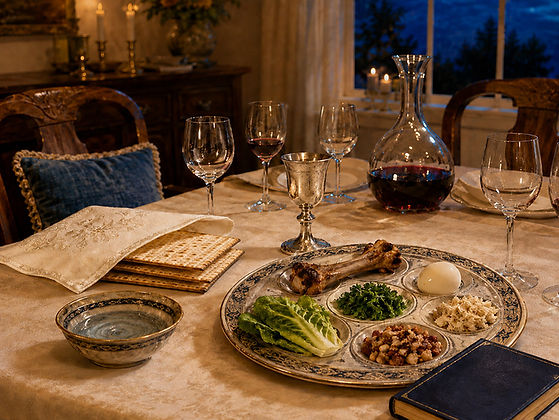
Passover commemorates the Exodus from Egypt and the Jewish people’s journey from slavery to freedom. At the seder table, the story is retold through questions, symbolic foods, readings, songs, and shared traditions.
JCM holds an annual community seder and provides Passover information, resources, music, and guidance for families celebrating at home.

Yom HaShoah
Yom HaShoah is Holocaust Remembrance Day. We remember the six million Jews murdered during the Shoah, honor other victims of Nazi persecution, and recognize the courage of survivors, rescuers, and those who resisted.
Through remembrance, testimony, prayer, and education, we renew our commitment to confront antisemitism, hatred, and dehumanization wherever they appear.
[Coming: Learn About JCM's Yom HaShoah Observance]**
Lag BaOmer
Lag BaOmer occurs during the counting of the Omer between Passover and Shavuot.
Traditionally associated with Rabbi Shimon bar Yochai and the students of Rabbi Akiva, it is often celebrated with outdoor gatherings, music, picnics, and bonfires.


Shavuot
Shavuot celebrates the giving of the Torah at Mount Sinai. It also has ancient agricultural roots as a festival of the first fruits.
Traditional observances include studying Torah, reading the Book of Ruth, attending services, decorating with greenery, and enjoying dairy foods such as blintzes and cheesecake.
Tisha B'Av
Tisha B’Av is a solemn day commemorating the destruction of the First and Second Temples in Jerusalem and other tragedies throughout Jewish history.
The Book of Lamentations—Eicha—is traditionally read as the community reflects upon destruction, exile, suffering, and renewal.

Jewish holidays are experienced in many ways: in the synagogue, around the family table, through study and prayer, and by gathering with community. Whether you have celebrated these holidays throughout your life or are encountering them for the first time, you are welcome at the Jewish Center of the Moriches.
For service times and the latest holiday programs, please consult our calendar or contact us.